
Sustainable Fishing Gear Platform
Guidelines, Survey Results, Interpretation, Paper, Fishing Gear Plastics and Recycling
The Sustainable-Fishing-Gear-Platform is a resource designed to support policymakers, industry leaders, and the general public in planning economic capacity and optimizing recycling processes within the fishing sector.
Built on comprehensive surveys of fisheries and fishermen, the platform provides valuable insights into the quantities and material conditions of lost, abandoned, or discarded fishing nets, as well as the socio-economic and socio-cultural factors influencing these issues.



Best Practice Guidelines
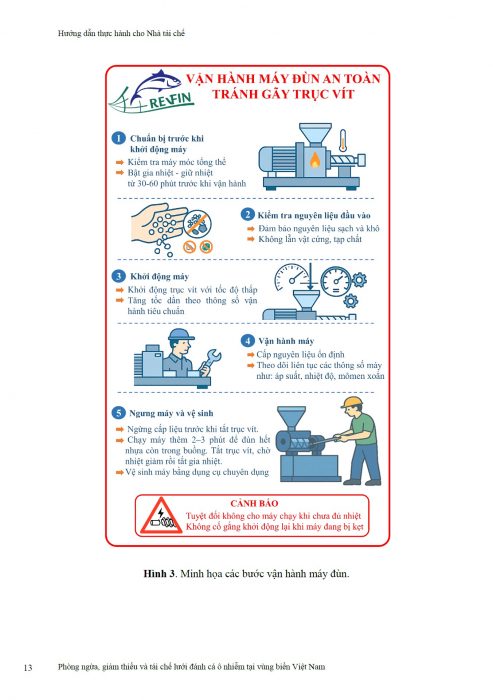
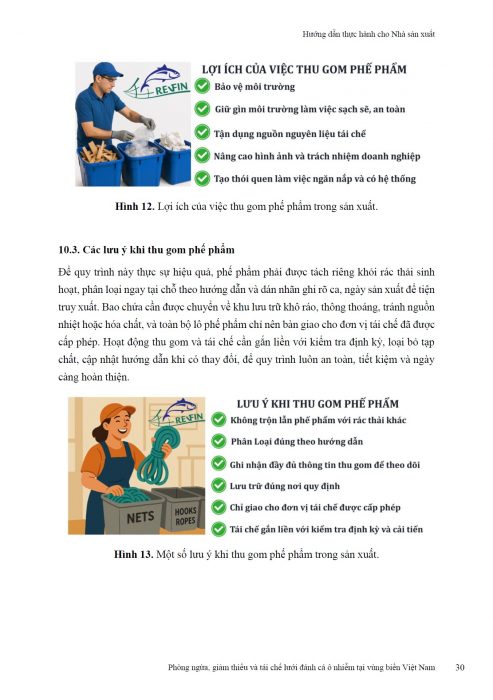
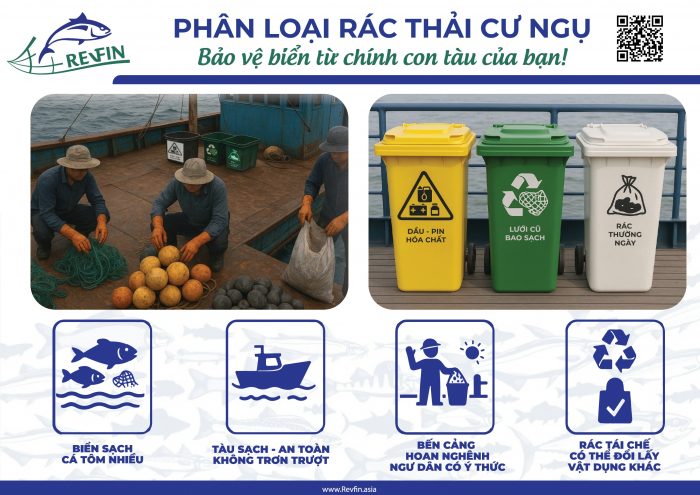
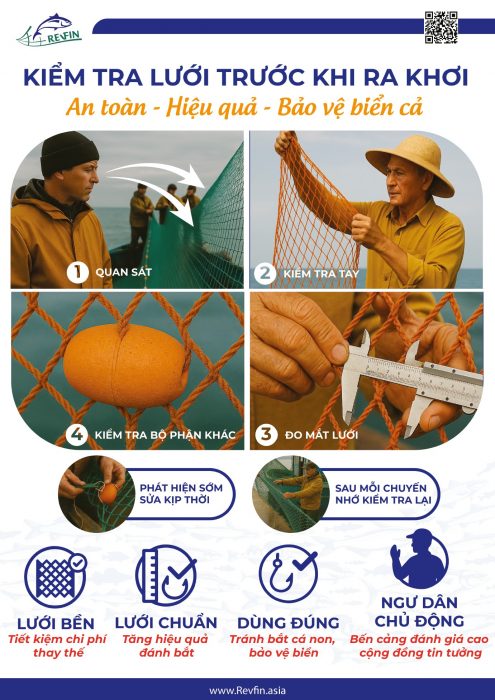
The best practice guidelines available here are provided as manuals for manufacturers and recyclers, as postcards for fishermen, and as posters for port logistics. They are intended to improve the circular economy in the area of fishing gear.
Paper
During the REVFIN project Papers about the topic fishing net recycling are released:
2024 Prevention, Reduction and Recycling of Fishnet Pollution in Vietnamese Coastel Waters
| Conference: / | Date: 2024 | Max Ehleben; Achim Schmiemann |
| Vietnam has a very long coastline, which is more than 2100 miles long and mostly culti- vated. In Vietnam, about 280,000 to 730,000 tons of plastic waste are dumped into the sea every year, with ropes, fishing nets and other waste from fishing vessels (6 m and longer) accounting for more than 64,100 tons per year. Studies have shown that 5.7% of fishing nets, 8.6% of traps and cages and 29% of all fishing ropes and other waste are consumed and disposed of in the environment. Objective: The aim of the project is to adapt suitable recycling technologies and the associated strength- ening of environmental awareness in dealing with plastic products. Methods: Fishing net material from different phases of use is examined using modern analysis methods and categorized with regard to subsequent recycling or reuse. Results: The main challenge in recycling fishing nets is the production of unmixed material flows, as polyamide fibers are also processed in addition to nets made from polyolefins. In addition, the condition of the nets after several months or years of use with interim repairs must be investigated. Mechanical, thermal and saltwater stress as well as UV exposure cause lasting damage to the nets. Furthermore, the possibilities of returning the fishing net material to its original use or producing alternative products, for example for everyday use, from fishing net materials using simple processing techniques are being evaluated. A total of three demonstration centers will be set up at three Vietnamese universities. Conclusion: The development of best practice guidelines for the reusability and recyclability of fish- ing gear strengthens the awareness of small and medium-sized fishing companies for circular econo- my solutions and their implementation. The conditions will be created to develop suitable framework conditions for the prevention of marine litter from fishing gear and thus promote sustainable circular economy solutions. |
2024.04_Sustainable Approaches To Fishing Gear Debris In Europe: Effective Management, Reduction And Recycling Strategies
| Conference: / | Date: 12. April 2024 | Thomas Potempa, James Henderson, Sofie Hoang, Max Ehleben |
| The book outlines the grave issue of marine litter and presents a focused approach to addressing it in Vietnam through international collaboration, policy-making, and education. Marine litter is a significant global challenge affecting all marine environments. It stems from various human activities, with the consequences impacting ecosystems, marine life, and coastal communities economically and culturally. Global efforts are necessary to combat this issue, emphasizing prevention, reduction, and cleanup. The German „Prevention, reduction and recycling of fishnets polluting Vietnamese coastal waters“ supports projects to mitigate marine litter. One such initiative, the REVFIN project, targets the reduction of marine litter from fishing nets in Vietnamese waters, enhancing higher education, recycling, and creating circular economies. Recognizing that regional differences demand tailored solutions, the project advises on implementing recycling policies and frameworks, promoting sustainable practices suited to the local context. The transition to a circular economy is essential to lessen marine litter by prioritizing the recycling of resources and sustainable waste management, which helps prevent the generation of marine litter. Adapting Western European solutions to Vietnam’s unique environmental, cultural, and economic conditions is crucial for effectiveness. Learning from Europe’s best practices in waste management and regulation could inspire Vietnamese solutions, fostering cooperation between government, businesses, and civil society. This work serves as a foundation for developing strategies for managing and recycling fishing gear debris in Vietnam, combining European experiences with local objectives to empower Vietnamese stakeholders to make informed decisions for their marine ecosystems and future sustainability. |
2025.01_Assessing the Economic and Environmental Impact of Plastic Waste from Fishing Gear
| Conference: iVCEES-2024 | Date: January 2025 | Nguyen Van Nhi Tran Nguyen Pham Quang |
| The accumulation of plastic waste from fishing activities is posing an increasing threat to marine ecosystems, contributing significantly to the deterioration of oceanic environments. This waste, comprising nets, lines, and traps, has a significant impact on ecological, economic, and social consequences. The degradation of these materials into microplastics further exacerbates environmental issues. Vietnam, identified as one of the major contributors of marine plastic pollution, lacks comprehensive data on the sources and quantities of plastic waste in coastal areas, particularly regarding plastic originating from fishing activities. The survey was conducted to collect information on the quantities and physical condition of lost, abandoned or discarded fishing nets as well as the socioeconomic and socio-cultural context. This research presents findings from a comprehensive survey of 525 fishermen and fishery enterprises in Khanh Hoa province, Vietnam, focusing on four main areas: economic costs associated with fishing gear, the use-phase of fishing nets, end-of-life management practices, and the perceived environmental impacts of discarded or lost fishing gear. The fishermen interviewed represented various fishing methods, including trawl fishing (43,05%), gillnet fishing (25,14%), light fishing for triggerfish (14,1%), purse seine fishing (7,81%), and others (9,9%). The results indicated that the economic burden of replacing and repairing fishing gear varied significantly across fishing methods. Purse seine fishing incurred the lowest gear-related costs, accounting for only 0,72% of the total annual operating costs, while other methods experienced costs exceeding 2%. Key causes of gear loss were identified as bad weather (33,33% for both trawling and light fishing), interactions with wild animals (30,16% for light fishing), entanglement with bottom obstructions (52,45% for trawling), and technical failures (23,91% for seine fishing). The average lifespan of nets also varied greatly among different fishing methods. Purse seine nets had the longest lifespan of 36 months, followed by gillnets (35 months), light fishing nets (25 months), and trawl nets (22 months). After a considerable period of utilisation, old nets are typically sold at a low cost as scrap. In terms of net loss, gillnet fishing recorded the highest annual losses at 130 kg, followed by purse seine fishing (117 kg), while trawling and light fishing experienced lower losses (33 kg and 31 kg, respectively). Material loss was calculated as the sum of additional plastic onshore and on the sea voyage. The majority of fishermen surveyed recognized the environmental risks posed by plastic waste from lost fishing gear, particularly in terms of economic losses, reduced fish stocks, threats to maritime traffic, and impacts on tourism. However, a small minority (8,67%) expressed minimal concern over the environmental consequences of abandoned fishing gear. These findings underscore the need for effective management strategies, including gear recycling programs, improved retrieval systems for lost gear, and increased awareness among the fishing community to mitigate the adverse impacts of plastic waste on marine ecosystems. |
2025.02_The Fishing Gear in Coastal Areas of Quang Ninh, Vietnam
| Conference: / | Date: 17 Feb 2025 | Chu Luong Tri |
| Plastic waste, including fishing gear, is a pressing issue in Quang Ninh coastal areas of Vietnam. To assess the current situation and socio-economic aspects related to fishing gear, this study conducted a social survey of 500 fishing vessels in the study area. The results showed that most of the fishing fleet in Quang Ninh is small in size (6-12m) and operates close to shore, while the gillnetting has the largest number (1173/2873) of vessels. Among the popular fishing methods in Quang Ninh, trawling accounts for the majority of main/cover net abandoned, lost, or otherwise discarded (23.0%) while gillnetting and longlining contributed the same portion of rope (27.0%). Overall, the proportion of main/cover net and rope waste generated in the study area accounts for about 9.1% and 1.8%, respectively. The initial survey with local people pointed out that support from administrators in suitable infrastructures/facilities is preferable for the efficient management of fishing gear. |
2025.06_End of Recyclability – Considering the Ageing of Plastic Materials and Its Implication on Potential Circularity
| Conference: GCSM 2024 | Date: 27 June 2025 | Thomas Potempa, Max Ehleben, Max Juraschek |
| The manufacturing of products is connected to environmental impacts due to material and energy demands. One central strategy towards reducing these impacts is establishing circular material flows by reintegrating end of life products as raw materials for production processes. Sustainable manufacturing aims for raising the share of recycled material, while primary resources are only covering losses during use phase and recycling. Hence, the transition towards circular economy requires considerations of end-of-life treatment and recyclability. However, the recyclability of materials depends on several influencing factors and typically degrades over time as ageing occurs. For this purpose, assessment methods for the actual quality of available materials are required providing decision support for identification of the best recycling route. Against this background, a framework is presented for determining the recyclability of plastic materials over time, which incorporates decision criteria for up-, and down-recycling process routes and links this information with material quality and material degradation over time. Subsequently, it is shown that the recyclability of plastics is dependent on its age and that a point can be defined as EoR (End of Recyclability), which can support decision making on integrating recycled materials in manufacturing. |
2025.06_Waste to Value Process Chain for Recycling of Fishing Gear Collected from Coastal Waters
| Conference: GCSM 2024 | Date: 27 June 2025 | Thomas Potempa, James Henderson, Julia Tetzner, Sofie Hoang, Max Ehleben, Max Juraschek |
| Plastic waste in coastal waters has become a major environmental concern and a visible sign of ocean pollution. A significant share of the floating waste material originates from used and lost fishing gear. By establishing suitable recycling processing chains, used fishing gear can become a valuable resource for the manufacturing of products, fostering its extraction from the water and boosting local economies. Post-use fishing gear, however, is a very challenging input material for processing into recylcates. Understanding its degradation mechanisms is crucial for designing a recycling process that will yield high value materials. There are particular obstacles connected with each recycling step, starting with the collection of very heterogeneously aged and deteriorated fishing gear. Consecutively, shredding of the waste material requires the development of specific technological solutions. Marine dirt adds additional obstacles. Further processing steps that need to be adapted include extrusion, pelletizing injection molding and marketing of the products from recycled material in competition with ones using raw materials. This study presents a waste-to-value process chain design that addresses the specific challenges of recycling fishing gear collected from coastal waters. Data has been collected to identify and quantify sources of plastic waste from fishing activities, and solutions have been developed in local higher education through a joint German-Vietnamese effort. |
2025.06_Characterization of Virgin and Used Fishing Gear from Vietnam
| Conference: GCSM 2024 | Date: 27 June 2025 | Thomas Potempa, James Henderson, Julia Tetzner, Sofie Hoang, Max Ehleben, Max Juraschek |
| Marine plastic waste from fisheries has emerged as a significant environmental issue, posing a significant threat to marine biodiversity and ecosystem health. The material recycling of fishing gear is an effective way to reduce waste and promote a circular economy. This study examines the characteristics of virgin and used fishing nets and ropes to understand their recyclability before they are discarded. The used nets and ropes in this study were in service for up to two years. The material characteristics were identified based on Fourier-transform infrared (FTIR) spectroscopy while thermal properties were obtained using differential scanning calorimetry (DSC). Based on FTIR results, the main polymer of the fishing nets was found to be PE, while the fishing ropes were found to be a blend of PE/PP and a combination of PE/PP and PET. The aging and oxidation process produces new bands in the infrared (IR) spectra of PE and PP fishing nets and ropes. The significant differences between used and virgin materials were also obtained in terms of crystallization enthalpies. This suggests that the fishing nets and ropes were affected by environmental factors. |
2025.09_Vietnamese fishers‘ perceptions on the effects of abandoned, lost, and discarded fishing gear and their willingness to participate in retrieval efforts
| Conference: / | Date: September 2025 | Quach Thi Khanh Ngoc, Alena Mychkova, Nguyen Thi Ngan, Pham Quoc Hung, Thomas Potempa, Max Patrick Ehleben |
| The accumulation of plastic waste from fishing activities is posing an increasing threat to marine ecosystems, contributing significantly to the deterioration of oceanic environments. This waste, comprising nets, lines, and traps, has a significant impact on ecological, economic, and social consequences. The degradation of these materials into microplastics further exacerbates environmental issues. Vietnam, identified as one of the major contributors of marine plastic pollution, lacks comprehensive data on the sources and quantities of plastic waste in coastal areas, particularly regarding plastic originating from fishing activities. The survey was conducted to collect information on the quantities aAbandoned, Lost, or Otherwise Discarded Fishing Gear (ALDFG) is a global challenge, that adversely impacts both marine ecosystems and the livelihood of fishers. This study explores the fishers’ perceptions and concerns regarding ALDFG consequences, and investigates how these concerns shape their willingness to participate in retrieval efforts. Data were collected through a survey of 525 fishers in Khanh Hoa province, Vietnam. Using ordered logit and binary logit analyses, our results indicate that Vietnamese fishers‘ concerns about ALDFG are significantly influenced by their perceptions of the broader consequences of marine litter. These heightened concerns subsequently lead to a greater willingness among fishers to engage in retrieval efforts. Additionally, our findings suggest that fishers who have experienced direct economic or operational losses due to ALDFG, such as damages to their catch or gear, are more inclined to take part in retrieval activities. It is recommended that targeted awareness campaigns, incentive programs, and waste management systems should be implemented to address not only the environmental impacts but also enhance the economic benefits of retrieval efforts, thereby encouraging greater participation among fishers. |
2025.11_Recycling of End-of-Life Trawling Nets in Vietnam Towards Sustainable Circular Economy Applications
| Conference: / | Date: November 2025 | Do, N H; Nguyen, T T N; Nguyen, L T M; Do, X T; Nguyen, Q D; Do, T V; Luxburg-Marten, W G v; Tetzner, J; Juraschek, M; Ehleben, M. |
| Plastic waste from end-of-life (EOL) fishing nets is a significant contributor to marine pollution. Recycling these nets has attracted increasing attention, particularly in coastal countries such as Vietnam. However, recycled materials often exhibit reduced properties compared to virgin materials due to degradation. Blending recycled and virgin polymers provides a simple solution to obtain materials with properties close to virgin ones, thereby reducing the demand for natural resource extraction. In this study, EOL trawling nets were collected, cleaned, shredded, and extruded into recycled granulates (RGs), which were compared with virgin granulates (VGs) and a 1:1 blend (R-VGs). Characterization was performed using FTIR, DSC, MFI, and tensile testing. Results confirm that the nets are made of high-density polyethylene (HDPE). RGs showed slightly lower yield stress (20.94 MPa) than VGs (21.59 MPa), while R-VGs reached 21.50 MPa, closely matching virgin properties. The mechanical performance of RGs was sufficient for filament production in 3D printing, demonstrating a feasible approach toward sustainable circular economy applications. |
2025.12_Increasing the recycling rates of post-use fishing ropes: the role of cleaning processes and the possibilities of a systematic Individual-Producer-Responsibility implementation
| Conference: / | Date: December 2025 | Thomas Potempa, Nguyen Van Nhi Tran, Max Ehleben, Quang Nguyen Pham, Le Binh Do, Xuan Huyen Vo, Robin Führmann, Welf Graf v. Luxburg-Marten, Julia Tetzner |
| Plastics from fishing gear represent a significant source of marine pollution, with post-use fishing ropes made of high-density polyethylene (HDPE) and polypropylene (PP) posing both environmental challenges and recycling opportunities. This study investigates the mechanical recyclability of post-use fishing ropes and the effect of washing processes on material recovery. Used ropes collected from Vietnamese fisheries were sorted, subjected to up to five washing cycles, and analyzed through FTIR spectroscopy, differential scanning calorimetry (DSC), and mechanical testing. Results indicate that washing significantly reduces surface impurities, leading to improved flexural modulus and yield strength of the recyclates, while impact strength remains largely unaffected. Both old bright (OBR) and old dark ropes (ODR) retain accessible crystallinity and mechanical properties comparable to virgin material when optimally washed. The study demonstrates that the mechanical properties of recycled material are sufficient for reintegration as up to 25 % recyclate in new fishing ropes, supporting circular economy goals and forthcoming EU requirements for recycled content. Our findings underscore the feasibility of closed-loop recycling for fishing gear polymers and advocate for integrating washing steps and producer responsibility schemes to improve material circularity and reduce marine plastic pollution. |
2025.12_Designing a Value-Added Tax-integrated recovery scheme for Abandoned, Lost or Discarded Fishing Gear: Science–policy integration and decision-support for Vietnam’s fisheries
| Conference: / | Date: December 2025 | Thomas Potempa; Hung Quoc Pham; Max Ehleben |
| Abandoned, lost, or otherwise discarded fishing gear (ALDFG) is a critical source of marine plastic pollution in Vietnam, yet formal recovery participation remains low due to weakly aligned incentives and logistical frictions. We design and evaluate a VAT-linked circular economy instrument that refunds the 5% VAT on new gear for each kilogram of ALDFG returned and verified at ports, while allowing fishers to retain on-site resale proceeds to informal buyers. Drawing on a face-to-face survey of 1,525 fishers across three coastal provinces, behavioural evidence on tax salience, and regulatory analysis of Vietnam’s VAT framework, we quantify the combined incentive at 14,500–16,500 VND/kg (≈ 8–10% of new gear price). The scheme integrates port mass verification and receipts with VAT documentation, achieves low estimated administrative cost (≤ 0.5% of incentive value), and aligns with informal market practices already used by more than 89% of fishers. Modelling indicates that, under clear communication, participation can rise substantially from current formal return rates, delivering a several-fold increase in verified returns without requiring new bureaucracy. The approach is administratively feasible (requiring a modest legal amendment to extend VAT refund eligibility to ALDFG returns), politically practical, and transferable to comparable fisheries and plastic-intensive sectors. We present an implementation roadmap and governance safeguards (receipt reconciliation, price-variation monitoring, recycling-market stability) to support near-term adoption. |
2026.01_The rescue Mission: Friends and Grandma Quy’s House
| Conference: / | Date: January 2026 | Franziska Heller |
| The Rescue Mission: Friends and Grandma Quy’s House is a children’s book that tells a story about marine pollution, recycling, environmental awareness and environmental protection. |
2026.01_Optimizing the Estimation of Abandoned, Lost or Discarded Fishing Gear in Developing Countries: A Data-Driven, Behaviourally Corrected Method Using Economic and Survey Data
| Conference: / | Date: January 2026 | Thomas Potempa |
| Abandoned, lost, or otherwise discarded fishing gear (ALDFG) is a persistent source of marine plastic pollution with ecological and economic impacts. Estimation methods in developing-country contexts often rely on self-reported survey metrics that are vulnerable to recall biases and unit misunderstandings, which can overstate ALDFG by factors of two to five. We present a transparent, transferable framework that integrates economic anchors (replacement and investment costs), survey‑validated gear masses, and behavioural corrections to improve ALDFG estimation. The six-step method comprises: (1) structured data collection and harmonization; (2) economic reasonability checks; (3) empirical price‑per‑kg derivation; (4) cost‑to‑mass conversion by gear type; (5) behavioural correction for availability and social desirability biases; and (6) sensitivity/uncertainty analysis with optional scaling. We demonstrate the approach with survey data from 1,500 fishers in three Vietnamese provinces. Sample‑reported annual replacement expenditures for nets (33.24 billion VND) are converted to mass lost using empirical price‑per‑kg, reconciling mismatches between per‑trip losses and annual costs. The framework differentiates nets and ropes, produces uncertainty bounds, and yields policy‑ready estimates at local or sectoral scales without publishing politically sensitive national totals. The method is transferable to other developing‑country fisheries and can inform design of retrieval, recycling, and extended producer responsibility schemes. |
2026.04_Educational programme for sustainable management and recycling of fishing gear and plastics
| Conference: / | Date: April 2026 | Sylvia Waschke, Thomas Potempa, Max Eheleben, James Henderson |
| The educational programme provides students with practical, scientifically based knowledge to help them manage and recycle fishing gear and plastics sustainably. This modular continuing education programme is aimed at students, professionals and managers in the fields of fisheries, waste management and public administration. Core content includes waste management, material identification and preparation, processing methods, and environmental and material analysis. Particular emphasis is placed on developing economically and ecologically sustainable solutions, practical exercises and comprehensive quality assurance. The programme supports the development of the competencies required for the responsible handling of fishery-specific plastics, helping to promote the sustainable use of resources. |
2026.04_Bildungsprogramm für nachhaltiges Management und Recycling von Fischereigeräten und Kunststoffen
| Conference: / | Date: April 2026 | Sylvia Waschke, Thomas Potempa, Max Eheleben, James Henderson |
| Das Bildungsprogramm vermittelt praxisnahes, wissenschaftlich fundiertes Wissen zum nachhaltigen Management und Recycling von Fischereigeräten und Kunststoffen. Die modular aufgebaute Weiterbildung richtet sich an Studierende, Fach- und Führungskräfte aus Fischerei, Entsorgung und Verwaltung. Kerninhalte sind Abfallmanagement, Materialidentifikation, Aufbereitung, Verarbeitungsverfahren sowie Umwelt- und Materialanalytik. Spezifische Schwerpunkte liegen auf der Entwicklung wirtschaftlich und ökologisch nachhaltiger Lösungen, praxisnahen Übungen und einer umfassenden Qualitätssicherung. Das Programm unterstützt den Kompetenzaufbau für einen verantwortungsvollen Umgang mit fischereispezifischen Kunststoffen und trägt zur Förderung nachhaltiger Ressourcennutzung bei. |
2026.05_Abandoned, Lost, or Otherwise Discarded Fishing Gear in Quang Ninh, Vietnam
| Conference: / | Date: May 2026 | Chu Luong Tri, Alena Mychkova, Dinh Quynh, Le Duy Khuong, Thomas Potempa, Max Eheleben |
| Abandoned, lost, or otherwise discarded fishing gear (ALDFG) represents a major source of marine plastic pollution, causing significant ecological degradation and socio-economic losses in coastal regions. This study aims to quantify the magnitude of ALDFG, identify its primary causes, and evaluate management opportunities in the coastal waters of Quang Ninh Province, Vietnam. The analysis is based on 500 structured social survey interviews with local fishers, complemented by official government fisheries statistics. Results show that Quang Ninh’s fishing fleet is dominated by small-scale vessels (6–12 m) operating mainly in nearshore waters, with gillnetting and trawling as the most prevalent fishing methods. The estimated ALDFG rates are 9.1% for main/cover nets and 1.8% for rope, with trawling contributing the largest share of discarded nets (23%), while trapping and gillnetting together account for the highest proportion of rope losses (27%). Gear snagging on seabed obstructions was identified as the dominant cause of gear loss (94%), followed by adverse weather conditions (36%) and operational errors (18%). Although 99.6% of fishers reported collecting damaged gear onboard, 93.6% indicated that port infrastructure is inadequate for the proper collection, storage, and recycling of this gear. Fishers expressed strong support for organized gear collection programs, recycling schemes, and financial incentives to reduce ALDFG. The findings underscore the need to integrate ALDFG management into local fisheries governance by enhancing onshore infrastructure, implementing targeted policies, and promoting circular-economy-oriented recycling initiatives. Such measures are essential to mitigate marine plastic pollution and enhance the long-term sustainability of fisheries in Quang Ninh’s coastal waters. |
2026.05_Plastic fishing gear losses in the Southwestern waters of Vietnam – survey based performance and perception of fishermen
| Conference: / | Date: May 2026 | Van Nha Duong, Alena Mychkova, Van An Nguyen, Vu Khanh Ho, Huu Du Nguyen, Thi Hong Ngoc Dang, Thi Kim Binh Trinh, Van Thanh Nguyen, Thomas Potempa, Max Eheleben |
| Abandoned, Lost, and Discarded Fishing Gear (ALDFG) in the ocean represents a critical environmental concern for scientists, authorities, and fishermen. Vietnam ranks among the top five countries globally for marine waste emissions, with Kien Giang province operating the largest fishing fleet nationally. This study surveyed 500 fishermen in Kien Giang to assess the current situation, perceptions, and challenges regarding ALDFG reduction. The results revealed that the fishermen had, on average, 16 years of fishing experience and a first-grade education level. Trawl nets were the most commonly used gear, followed by gillnets, long nets, and purse seines, with long net users expressing the greatest ALDFG concern. Each vessel carried an average of 221.94 kg of plastic fishing gear, with snagging on seabed obstructions identified as the primary loss cause. Economic losses were fishermen’s predominant ALDFG concern (agreement level 3.95–4.47 on a 5-point scale), peaking at 4.47 among purse seine users. Time-consuming disposal emerged as the most significant negative impact (3.38/5). Gear maintenance was the most frequently employed loss-prevention strategy, while economic motivations primarily drove ALDFG retrieval to shore (58% for selling, 16% for reuse/recycling). Binary logistic regression identified eight significant predictors of collection behavior (Nagelkerke R²=0.319), time consuming for dealing with litter and economic losses as the strongest motivators. The study recommends enhancing fishermen’s awareness through education-appropriate training programs, implementing economic incentive mechanisms (VAT refund schemes, deposit-refund systems, or cash-for-collection programs), improving port collection infrastructure, and establishing multi-stakeholder coordination frameworks. These interventions should address the low education levels characteristic of this fishing community while leveraging economic motivations and safety concerns to enhance ALDFG recovery efforts in Kien Giang’s marine environment. |
2026.06_Abandoned, Lost or Otherwise Discarded Fishing Gear (ALDFG) and the Perceptions of Vietnamese Fishers
| Conference: / | Date: June 2026 | Nguyen Van Nguyen, Liem Dang Phan, Alena Mychkova, Thanh Van Do, Tan Sy Pham, Thomas Potempa, Sang Van Vu, Max Eheleben |
| Abandoned, lost or otherwise discarded fishing gear (ALDFG) is a global challenge that negatively affects marine ecosystems and fishers’ livelihoods. Survey results from 1864 capture fishers in Vietnam show that the total mass of ALDFG is 82,720 kg/year, with an average loss rate of 0.24% of the total plastic used. The average ALDFG mass from gillnet fisheries is 26.0 ± 1.2 kg/vessel/year, trap fisheries 16.1 ± 2.6 kg/vessel/year, hook and line fisheries 13.8 ± 1.4 kg/vessel/year, trawl fisheries 8.8 ± 1.1 kg/vessel/year, stick-held falling net fisheries 5.1 ± 2.1 kg/vessel/year, and purse seine fisheries 4.2 ± 1.4 kg/vessel/year. Polyethylene (PE) accounts for 47.4%, polyamide (PA) 29.5% and polypropylene (PP) 17.2% of the total ALDFG mass. Results from the selected partial proportional odds model show that fishers’ concern about ALDFG increases with education, fishing experience, vessel length, and stronger awareness of environmental and economic impacts, whereas age, days at sea, perceived navigation hazards, and perceived impacts on fish stocks are negatively associated with concern; perceived tourism impacts show a statistically significant threshold-varying effect across concern levels. These findings provide a scientific basis for developing sustainable fishing-gear management policies, aiming to reduce marine plastic pollution in Vietnam. These findings provide evidence for conservation-oriented fishing-gear management in Vietnam by identifying the gear types and fisher perceptions most relevant to reducing ghost fishing, marine plastic leakage, and risks to marine biodiversity and coastal ecosystems. |